Free standard shipping Australia wide - Free International Shipping purchases over $200.00

–

Lapis Lazuli Jewellery: Meaning, History & How to Wear It

The 6,000-year history, deep blue colour & meaning of lapis lazuli

Few gemstones carry the weight of history that lapis lazuli does. This deep royal-blue stone has been mined, traded and worn for over 6,000 years — from the tombs of ancient pharaohs to the paintings of the Renaissance. Today, lapis lazuli jewellery remains one of the most striking and meaningful choices in natural gemstones. Here is everything you need to know.

What Is Lapis Lazuli?

Lapis lazuli is not a single mineral but a metamorphic rock composed primarily of lazurite (which gives it its blue colour), alongside calcite, pyrite and other minerals. It is the pyrite inclusions — tiny flecks of gold — that give lapis lazuli its signature night-sky appearance: deep blue scattered with natural gold.

Lapis lazuli scores 5–6 on the Mohs hardness scale, making it suitable for rings, necklaces, bracelets and earrings worn with care. It is best suited to pieces that won’t receive heavy daily impact, such as necklaces, earrings and occasional-wear rings.

Lapis Lazuli – Serendipity Jewelry Australia
Lapis Lazuli Colour Color

Lapis Lazuli Colour & Color

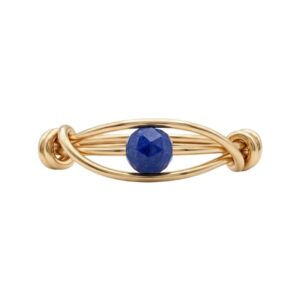
The colour of lapis lazuli ranges from bright cerulean blue to deep midnight blue, with the finest quality stones displaying an intense, even, royal blue with minimal white calcite veining. The natural gold pyrite inclusions are considered desirable and are part of what makes each piece unique — no two lapis lazuli stones look identical.

The stone’s name comes from the Latin lapis (stone) and the Persian lazhward (blue) — an appropriate name for a gem that has defined the colour blue across cultures and centuries.

Lapis Lazuli History

Lapis lazuli has been mined continuously in the Badakhshan province of Afghanistan for over 6,000 years — making it one of the oldest sources of gemstones in continuous use. From there, ancient trade routes carried it across the ancient world:

Ancient Egypt

Lapis lazuli was used in the death mask of Tutankhamun, ground into pigment for Cleopatra’s eye shadow, and used to create amulets and scarabs buried with pharaohs for protection in the afterlife.

Mesopotamia

Sumerian and Babylonian royalty wore lapis lazuli in jewellery and used it in ceremonial objects dating to 3000 BC.

Renaissance Europe

Ground lapis lazuli was used to create ultramarine, the most prized and expensive blue pigment in history, used by Vermeer, Michelangelo and Raphael. Its cost exceeded that of gold.

Today

Lapis lazuli continues to be mined in Afghanistan and valued as a gemstone for jewellery worldwide.

How to Style Lapis Lazuli Jewellery

Lapis lazuli’s deep midnight blue makes it one of the most versatile statement stones in jewellery. It pairs beautifully with:

Caring For Lapis Lazuli Jewellery

Caring for Lapis Lazuli Jewellery

Lapis lazuli requires a little more care than harder gemstones. To keep it looking its best:

  • Clean with a soft, damp cloth — avoid ultrasonic cleaners, steam cleaning and harsh chemicals
  • Remove lapis lazuli jewellery before swimming, bathing or using cleaning products
  • Store separately from harder gemstones that could scratch its surface
  • Avoid prolonged direct sunlight, which can fade the colour over time

Lapis Lazuli Jewellery at Serendipity

Handcrafted by Johanna Rodriguez in her Sydney workshop. Each lapis lazuli stone is selected for its rich midnight-blue colour and natural gold pyrite inclusions.

Free standard shipping Australia wide

Frequently Asked Questions

What is lapis lazuli?

Lapis lazuli is a deep-blue metamorphic rock composed primarily of the mineral lazurite, with pyrite (gold flecks) and calcite. It has been mined in Afghanistan for over 6,000 years and is one of the most historically significant gemstones in the world.

Lapis lazuli is associated with wisdom, truth and inner peace. It activates the third-eye and throat chakras, supporting clear thinking, honest communication and calm. It is also a traditional stone of protection, used by ancient Egyptians and Sumerian royalty for millennia.

Yes. While sapphire is the primary September birthstone, lapis lazuli is widely recognised as the modern alternative September birthstone. Both stones share a deep blue colour and associations with wisdom and truth.

What colour is lapis lazuli?

Lapis lazuli ranges from bright cerulean to deep midnight blue, with natural gold pyrite flecks throughout. The finest quality stones are an intense, even royal blue. The pyrite inclusions are considered desirable — they give each stone its distinctive, constellation-like appearance.

Clean lapis lazuli with a soft, damp cloth. Avoid harsh chemicals, ultrasonic cleaners and prolonged sunlight. Remove before swimming or bathing. Store away from harder gemstones to prevent scratching.

Lapis lazuli pairs beautifully with gold (echoing ancient Egyptian jewellery) and sterling silver (for a modern, contemporary look). Its deep blue works with white, navy, earth tones and neutral clothing. It is one of the most versatile natural gemstones for everyday styling.