
Gold Filled vs Gold Plated vs Solid Gold vs Sterling Silver: What's the Difference?
If you have ever shopped for jewellery online and wondered what the difference is between gold filled, gold plated, solid gold, rose gold, and sterling silver — you are not alone. These terms describe very different materials with very different price points, durability levels, and how they hold up over time. This guide breaks down each one clearly, including which is the best choice if you work with your hands or lead an active lifestyle.
Solid Gold
Solid gold is pure gold mixed with other metals to make it strong enough to wear. Pure gold (24k) is too soft on its own, so jewellers alloy it with copper, silver, or zinc to create different karats:

9k gold
37.5% pure gold. Most affordable solid gold. Common in Australian fine jewellery.

14k gold
58.3% pure gold. The most popular choice worldwide. Good balance of durability and gold content.

18k gold
75% pure gold. Richer colour, slightly softer than 14k.

24k gold
99.9% pure gold. Too soft for everyday jewellery — rarely used in wearable pieces.
Solid gold does not tarnish, does not flake, and will last a lifetime with basic care. It is the most valuable option and the one you can pass down as an heirloom.
Gold Filled
Gold filled jewellery is made by bonding a thick layer of real gold to a base metal (usually brass) under heat and pressure. By law, gold filled pieces must contain at least 5% gold by weight — which is approximately 100 times more gold than gold plated.
The result is jewellery that looks and feels like solid gold at a fraction of the price. Gold filled pieces will not tarnish, will not flake or chip under normal wear, and can last 10–30 years with proper care. It is an excellent choice for everyday jewellery.
At Serendipity, we use 14k gold filled across most of our gold-tone collection for exactly this reason.


Gold Vermeil
Gold vermeil is a premium form of gold-plated jewellery made with a sterling silver base and a thick layer of gold. Unlike standard gold plating, it must meet specific quality standards for both gold thickness and silver content.
It offers the look of solid gold at a more accessible price and generally lasts longer than traditional gold plated jewellery. However, because it is still a plated material, the gold layer can gradually wear over time with daily wear, water exposure, and friction. Gold vermeil is more durable than gold plated jewellery, but not as long-lasting as gold filled or solid gold.
Gold Plated
Gold plated jewellery has a very thin layer of gold electroplated over a base metal. The gold layer is typically less than 0.5 microns thick — a fraction of what gold filled uses.
This makes gold plated pieces affordable, but the coating wears off with time, friction, sweat, and contact with chemicals like perfume or cleaning products. Once the layer wears through, the base metal underneath (often brass or copper) becomes visible. Gold plated jewellery is best treated as fashion jewellery rather than an everyday piece you wear for years.
At Serendipity, we choose materials made to last. That’s why we use 14k gold filled, sterling silver, and solid gold instead of gold plated jewellery.


Rose Gold
Rose gold is not a separate material — it is an alloy of gold mixed with copper, which gives it the warm pink tone. Like yellow gold, rose gold comes in different forms:
- Solid rose gold — real gold alloyed with copper. 9k, 14k, and 18k are all available.
- Rose gold filled — a thick layer of rose gold bonded to base metal. Durable and long-lasting.
- Rose gold plated — thin coating, wears off over time.
The copper content in rose gold actually makes the alloy slightly harder than yellow gold of the same karat, which gives it a small durability advantage.
Sterling Silver vs Pure Silver
Pure silver (999) is too soft for everyday jewellery — it bends and scratches easily. Sterling silver solves this by combining 92.5% silver with 7.5% other metals (usually copper), which is why you will see it stamped as 925.
Sterling silver is strong, affordable, and beautiful. Its main drawback is that it tarnishes over time when exposed to air, moisture, and sulphur compounds (found in some perfumes, skin products, and even food). Regular cleaning keeps it looking its best. Sterling silver does not tarnish permanently — a quick polish brings it back.

Comparison at a Glance
| Material | Gold Content | Tarnishes? | Durability | Price Range |
|---|---|---|---|---|
| Solid Gold (9k–18k) | 37–75% | No | Excellent | High |
| Gold Filled (14k) | ~5% by weight | No | Very good | Mid |
| Gold Vermeil | Thick gold layer over sterling silver | Eventually wears off with time | Good | Mid |
| Gold Plated | <0.05% | Coating wears off | Low | Low |
| Rose Gold Filled | ~5% by weight | No | Very good | Mid |
| Sterling Silver (925) | None | Yes (reversible) | Good | Low–Mid |
Which Material Holds Up Best for Active Wear and Working with Your Hands?
If you work with your hands — in a kitchen, a workshop, outdoors, or in healthcare — your jewellery faces more than the average amount of friction, moisture, impact, and accidental pulls. Here is how each material holds up.

Solid Gold: Best overall durability
Solid gold is the most resilient in terms of not tarnishing or flaking regardless of what it is exposed to. The gold itself will not react to sweat, water, or most chemicals. However, gold is a relatively soft metal, so a hard impact can scratch or dent a solid gold piece, and a forceful pull on a thin chain can break it. Higher karat gold (18k) is slightly softer and more prone to scratching than 14k or 9k.

Gold Filled: Best value for active wear
Gold filled is the best everyday choice for active people. The thick bonded gold layer does not flake, chip, or wear off with friction the way plated jewellery does. It handles sweat and water well. For accidental pulls, the strength depends on the construction of the piece — a sturdy lobster clasp and a thicker chain gauge will resist pulling far better than a delicate box chain regardless of material.

Gold Plated: Avoid for active wear
Gold plated jewellery is not suitable for active wear. Friction, sweat, and repeated contact with hard surfaces will wear through the thin coating quickly. An accidental pull on a plated chain does not just risk breakage — it can cause the plating to crack and flake at the stress point, permanently affecting the appearance.

Sterling Silver: Good strength, needs more care
Sterling silver is actually harder than gold (especially high-karat gold), which means it resists surface scratches well. It handles physical impact and accidental pulls reasonably well because of its hardness. The downside for active wearers is that sweat, chlorine, and frequent moisture exposure accelerates tarnishing, so silver jewellery used in an active environment needs more regular cleaning than gold filled.

The clasp and chain thickness matters more than material for pulls
For anyone worried about jewellery breaking under an accidental pull, the most important factor is not the material but the chain thickness (gauge) and clasp type:
- Lobster clasp — the strongest everyday clasp. Resists accidental opening under tension.
- Spring ring clasp — lighter and less secure than a lobster clasp.
- Thicker chain gauge — a 1.5mm+ chain is significantly stronger than a 0.8mm cable chain.
- Safety clasp — has a secondary lock that prevents accidental opening entirely.
If you work with your hands, we recommend choosing a thicker chain style with a lobster or safety clasp in gold filled or solid gold for the best combination of durability and longevity.
Which Should You Choose?
- Best investment / heirloom: Solid gold (9k, 14k or 18k)
- Best everyday wear / active lifestyle: 14k gold filled or rose gold filled
- Best for sensitive skin: Solid gold or sterling silver (avoid plated if your skin reacts)
- Best budget option: Sterling silver (tarnishes but is easily cleaned)
- Avoid for active wear: Gold plated
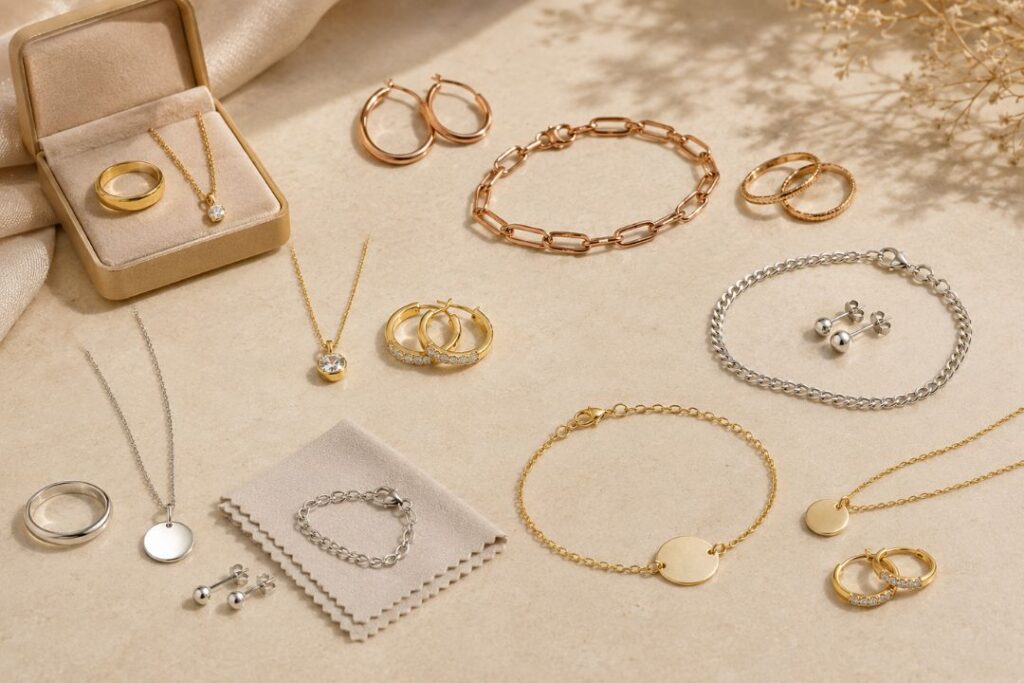
Shop by Material at Serendipity
At Serendipity, we make it easy to shop by material so you can choose exactly what suits your lifestyle:
Every piece is handmade by Johanna in her Sydney workshop, designed to be worn every day and built to last.
Frequently Asked Questions
What is the difference between gold filled and gold plated jewellery?
Gold filled jewellery contains a thick bonded layer of real gold that makes up at least 5% of the item’s weight. Gold plated jewellery has an extremely thin gold coating that can wear away relatively quickly with regular use.
Is gold filled jewellery waterproof?
Gold filled jewellery handles water, sweat, and everyday wear much better than gold plated jewellery. However, removing jewellery before swimming in chlorinated pools or using harsh chemicals will help maximise its lifespan.
Does sterling silver tarnish permanently?
No. Sterling silver naturally tarnishes over time, but the tarnish is reversible. Regular cleaning and polishing will restore its original shine.
Which material is best for sensitive skin?
Solid gold and sterling silver are generally the safest choices for sensitive skin. High-quality gold filled jewellery is also well tolerated by many people.
What is the best jewellery material for everyday wear?
For most people, 14k gold filled offers the best balance of durability, appearance, and value. For a lifetime piece, solid gold remains the premium choice.
Which material lasts the longest?
Solid gold lasts the longest and can be worn for generations. Gold filled jewellery can also last decades with proper care, while plated materials will eventually wear through over time.